Elon Musk 2026: SpaceX's $1.75T IPO, Starship V3, Neuralink, Tesla Optimus & the Terafab

Elon Musk in 2026: The Year Everything Converges
2026 is shaping up to be the most consequential year in Elon Musk's career. From SpaceX filing for the largest IPO in human history to Tesla's humanoid robots entering production, to Neuralink implanting brain chips at scale — Musk's empire is converging into something unprecedented. Here's everything you need to know.
SpaceX IPO: The Trillion-Dollar Offering
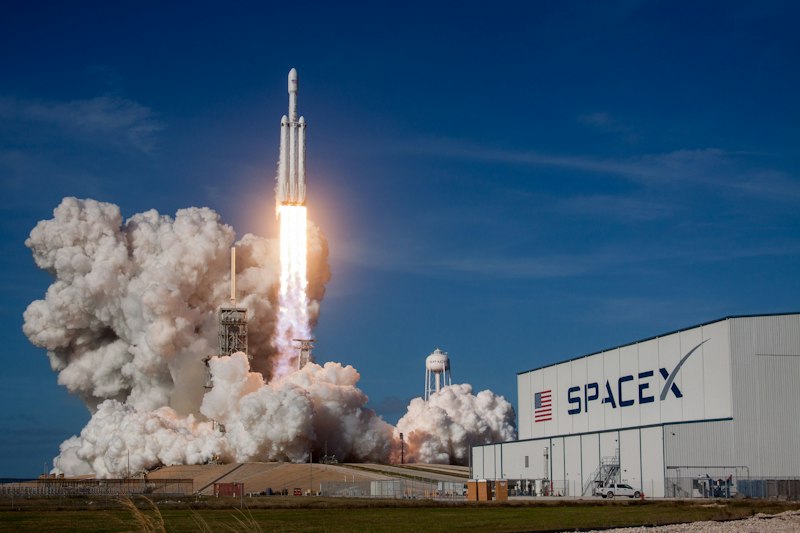
On April 1, 2026, SpaceX confidentially filed for an IPO with the SEC, targeting a June listing at a staggering $1.75 trillion valuation. If successful, it would be:
- The largest IPO in human history — raising up to $75 billion
- More than 3x the size of Saudi Aramco's 2019 record ($29.4B)
- The event that likely makes Musk the world's first trillionaire
SpaceX's valuation is primarily anchored by Starlink, its satellite internet service, which ended 2025 with 9.2 million subscribers and $10+ billion in revenue, projected to reach $24 billion by end of 2026.
In February 2026, SpaceX absorbed two other Musk businesses under its umbrella: the social media platform X (formerly Twitter) and AI company xAI. This controversial consolidation means the IPO essentially bundles rockets, satellites, social media, and artificial intelligence into a single public offering.
Sources: CNBC | Washington Post | Al Jazeera
Starship V3: The Most Powerful Rocket Ever Built
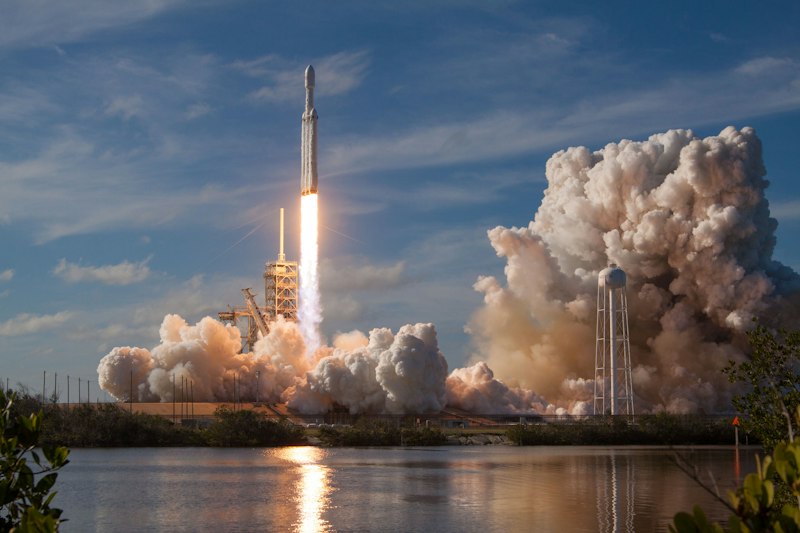
SpaceX is preparing for the 12th test flight of Starship, expected in mid-April 2026. This mission marks the debut of Starship Version 3 — a significantly upgraded vehicle that could change space travel forever.
What Makes V3 Special
| Feature | V2 (Current) | V3 (New) |
|---|---|---|
| Engine | Raptor 2 | Raptor 3 (2x thrust of Raptor 1) |
| Payload to LEO | ~100 tons | ~200 tons (fully reusable) |
| Engine weight | Standard | 43 metric tons lighter across 33 engines |
| Manufacturing cost | Baseline | 4x cheaper per engine |
The Booster 19 performed a 10-engine static fire test on March 16, 2026, at SpaceX's Starbase facility, loading cryogenic fuel on a V3 vehicle for the first time. SpaceX is also eyeing a Starship tower catch of the upper stage as early as spring 2026.
Sources: Space.com | Teslarati
The "Terafab": Musk's Chip Manufacturing Ambition
On March 22, 2026, Musk unveiled plans for the "Terafab" — a chip manufacturing facility to be built near Tesla's Austin headquarters. The goal: manufacture chips that can support 100 to 200 gigawatts of computing power per year, serving both Tesla's AI needs and SpaceX's satellite systems.
This represents Musk's play for vertical integration of the AI hardware stack. Instead of depending on Nvidia or TSMC, Musk wants to control chip production from silicon to satellite.
Source: TechCrunch
Digital Optimus & Project "Macrohard"
In March 2026, Musk revealed a joint project between Tesla and xAI called "Macrohard" (yes, really) — also known as "Digital Optimus". The system combines:
- xAI's Grok LLM — acting as a high-level "navigator" that understands intent
- Tesla's AI agent — processing real-time screen video, keyboard, and mouse actions
- The result: an AI system that can operate software like a human, autonomously executing tasks across any application
Grok 5: 6 Trillion Parameters Aimed at AGI
xAI's latest model, Grok 5, launched in Q1 2026 with an astonishing 6 trillion parameters. Musk claims it has a "10% probability of achieving general artificial intelligence." The model uses a multi-modal MoE (Mixture of Experts) architecture capable of:
- Parsing long-form videos in their entirety
- Answering temporal questions across video timelines
- Performing real-time computer actions via Digital Optimus
Neuralink: From Experiment to Production
Neuralink has crossed critical milestones in 2026:
- 12 patients with severe paralysis worldwide have received implants and are using them to control digital and physical tools with thought
- The company is moving to high-volume production with nearly fully automated surgical procedures
- The Blindsight implant, designed to restore vision for completely blind individuals, is scheduled for its first patient trial in 2026
- The upgraded N1 implant uses 128 thinner threads for less brain damage and better signal stability
Musk stated on X: "Device threads will go through the dura, without the need to remove it. This is a big deal."
Sources: Fox News | Neuralink Official
Tesla Optimus: 1 Million Robots Per Year
Tesla's humanoid robot Optimus is entering mass production with ambitious targets:
- Annual production target: 1 million units
- Cost per unit: $20,000-$30,000
- Key feature: Highly flexible hand design for precise assembly tasks
- 2026 capex: Tesla plans to spend $20+ billion (up from $8.5B in 2025)
Starlink: The Quiet Money Machine
While rockets and robots get the headlines, Starlink is quietly becoming one of the most profitable technology businesses in the world:
| Metric | 2024 | 2025 | 2026 (projected) |
|---|---|---|---|
| Subscribers | 4 million | 9.2 million | 15+ million |
| Revenue | $6.6B | $10B+ | $24B |
| Profit | $3B | $8B+ | $15B+ (est.) |
SpaceX launched 119 payloads on a smallsat rideshare mission on March 30, 2026, and continues to launch Starlink satellites at a pace of approximately one mission every 3 days.
Timeline: What's Coming Next
| Date | Event |
|---|---|
| Mid-April 2026 | Starship Flight 12 — V3 debut launch |
| Spring 2026 | First Starship upper stage tower catch attempt |
| June 2026 | SpaceX IPO (targeted) |
| H2 2026 | First Starship launch from Florida (LC-39A) |
| 2026 | Neuralink Blindsight first patient trial |
| 2026 | Tesla Optimus mass production begins |
| 2026 | Terafab construction starts near Austin |
The Bottom Line
Love him or criticize him, Elon Musk is executing on a vision of unprecedented scale. The convergence of SpaceX, Tesla, Neuralink, xAI, and Starlink into an integrated technology empire — with a potential $1.75 trillion IPO as its capstone — is something the tech world has never seen before. 2026 may well be remembered as the year Musk's companies stopped being separate bets and became a single, interconnected machine.
Comments
Sign in to leave a comment
No comments yet. Be the first!
Related Articles
Stay updated
Get notified when I publish new articles in English. No spam, unsubscribe anytime.