
The Tlahuelpuchi: Tlaxcala's vampire witch that still terrifies Mexico
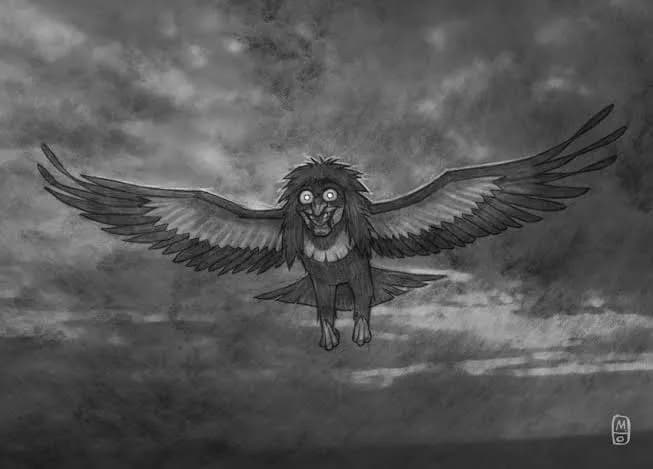
Introduction: Tlaxcala's nocturnal terror
In the heart of Mexico, among the cornfields and colonial towns of Tlaxcala, one of the most terrifying legends of pre-Hispanic folklore survives: the Tlahuelpuchi. This is not just a bedtime story — for centuries, entire communities have lived with the very real fear that a woman from their own family could transform into a supernatural creature thirsting for blood.
Unlike other Mexican legends such as La Llorona or the Nahual, the Tlahuelpuchi is specific to the Tlaxcalan region and its surroundings (Puebla, Veracruz, Oaxaca), and the most unsettling part is that the testimonies did not stop in the colonial era — they continue to this day.
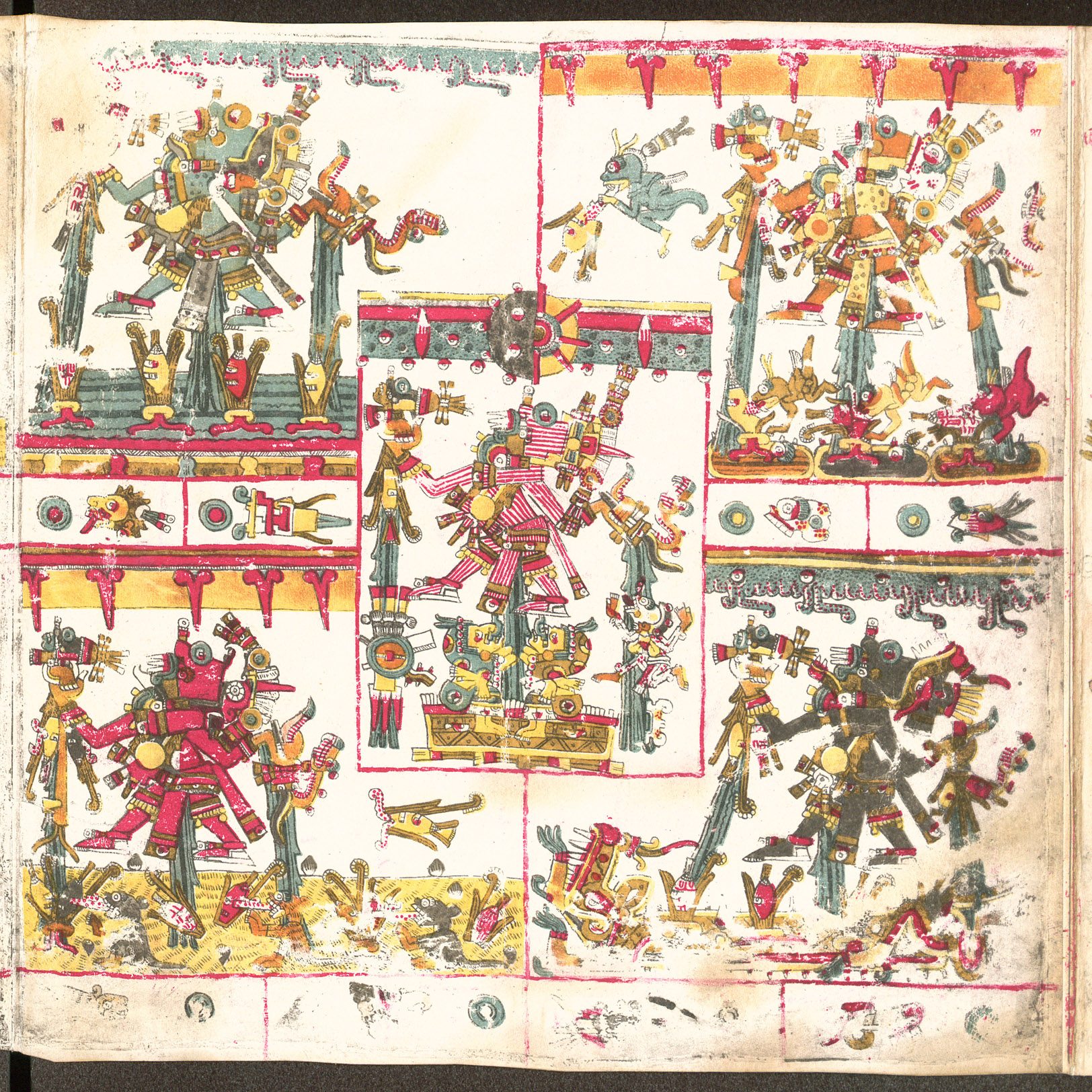
Source: Codex Borgia — Wikimedia Commons (Public Domain)
What is a Tlahuelpuchi?
The word Tlahuelpuchi comes from Nahuatl and roughly translates to "luminous incense burner" or "one who possesses the gift of witchcraft." In the Nahua-Tlaxcalan worldview, it refers to a person — almost always a woman — who is born with a supernatural curse or gift that turns her into a kind of vampire-witch.
Key characteristics
- Born, not made: The Tlahuelpuchi does not choose her condition. The curse manifests during puberty, typically with the first menstruation.
- Double life: By day they are completely normal women — neighbors, mothers, sisters. Nobody would suspect them.
- Nocturnal transformation: At night they can transform into animals: turkeys, vultures, cats, dogs, or even insects.
- Thirst for infant blood: They feed on human blood but prefer that of babies and small children, especially those under one year old.
- Family lineage: The curse is hereditary. If a Tlahuelpuchi dies, the "gift" passes to another woman in the family.
What does the Tlahuelpuchi do? The nocturnal ritual
According to Tlaxcalan oral tradition, a Tlahuelpuchi's hunting process follows a specific and chilling ritual:
1. The transformation
When everyone in the house is asleep, the Tlahuelpuchi goes to the hearth (the wood-fired kitchen). There she performs a ritual where she detaches her legs from the knees down, leaving them in the shape of a cross in front of the fire. Without her legs, her body transforms into an animal — usually a turkey (guajolote) that emits a phosphorescent glow.
2. The flight
In the form of a luminous bird, she flies over rooftops searching for homes where there are babies. It is said she can detect the scent of infant blood from great distances. Some accounts mention that she flies in the shape of a fireball or as a glowing mist.
3. The entry
The Tlahuelpuchi can enter homes in several ways:
- Transforming into mist or vapor that seeps through cracks
- Taking the form of an insect (flea, fly) to go unnoticed
- Hypnotizing the inhabitants to make them open doors or windows
4. The attack
Once inside, she returns to her human form and approaches the sleeping baby. She sucks the infant's blood — usually from the chest, neck, or back. The child is found dead in the morning, with purple bruises on the body but no visible wounds.
How to protect yourself: traditional remedies
For generations, Tlaxcalan families have followed specific rituals to protect their babies from Tlahuelpuchis. These are the best-known protections:
Metal objects
Metal is the Tlahuelpuchi's natural enemy. Families place:
- Open scissors under the baby's crib or sleeping mat, forming a cross
- Needles or pins around the bed
- A machete or knife under the pillow
- Copper coins in the corners of the room
Garlic and onion
Garlic and onion strands are hung on the baby's bedroom door and windows. The strong smell repels the creature. Some also rub garlic on door frames.
Mirrors and shiny objects
Placing a mirror facing the crib forces the Tlahuelpuchi to see herself in her monstrous form, which frightens her away. Shiny or reflective objects are also used.
Tortillas and excrement
It may sound strange, but one of the most widespread remedies is wrapping the baby in tortillas or smearing animal excrement on its body. The idea is that the smell masks the baby's blood and confuses the Tlahuelpuchi.
Reversed clothing
Dressing the baby with undergarments inside-out or placing bedding upside down is considered an effective protection, as it "confuses" the witch.
The Tlahuelpuchi's code of conduct
One of the most fascinating aspects of this legend is that, according to tradition, Tlahuelpuchis have rules they must follow:
- They cannot attack their own family: A Tlahuelpuchi can never feed on the blood of her own children or direct relatives.
- They must feed at least once a month: If they don't, they die.
- They cannot reveal themselves: If someone discovers her identity, the Tlahuelpuchi must flee or be destroyed.
- They respect territories: Each Tlahuelpuchi has an assigned territory and cannot hunt in another's area.
- They recognize each other: Tlahuelpuchis can detect one another and maintain a pact of silence.
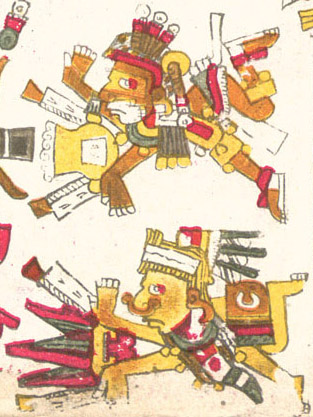
Source: Codex Borgia, Tzitzimime — Wikimedia Commons (Public Domain)
Testimonies and sightings: accounts that persist
What makes the Tlahuelpuchi legend unique is that it is not just a story from the past. Researchers, anthropologists, and journalists have documented modern testimonies that keep the belief alive.
Hugo Nutini's study (University of Pittsburgh)
Anthropologist Hugo Nutini spent decades investigating the Tlahuelpuchi phenomenon in Tlaxcala. In his book "Bloodsucking Witchcraft" (1993), he documented:
- More than 70 cases of infant deaths attributed to Tlahuelpuchis between 1960 and 1990
- Interviews with families who claimed to have seen lights flying over their homes the night of the death
- Entire communities that identified specific women as Tlahuelpuchis and socially marginalized them
- Cases where parents did not take the baby to a doctor because they were convinced "the witch had sucked it"
Modern accounts in rural communities
Even in the 21st century, in Tlaxcalan towns like San Pablo del Monte, Contla de Juan Cuamatzi, and Teolocholco, people still take precautions:
- In 2014, local media reported that families in San Pablo del Monte still placed scissors and garlic around their babies' cribs
- Testimonies collected by Mexico Desconocido journalists document elders who claim to have seen fireballs flying over fields at night
- In indigenous communities in the Puebla highlands, the belief is so strong that women accused of being Tlahuelpuchis have been assaulted or expelled from their towns
The "Witch of Atlixco" case
In the 2000s, reports circulated in Atlixco, Puebla, about sightings of a female figure flying between rooftops in the historic center. Neighbors claimed it was a Tlahuelpuchi. Although nothing was ever confirmed, the panic was real: entire families stopped taking their babies out at night for weeks.
Source: YoelResidente — Wikimedia Commons (CC BY-SA 4.0)
The Tlahuelpuchi in popular culture and fan art
In recent years, the Tlahuelpuchi has gained popularity beyond Tlaxcala thanks to social media, horror podcasts, and digital artists who have reinterpreted this creature.
Artistic representations
Tlahuelpuchi fan art typically features:
- Women with indigenous features mid-transformation, with turkey feathers emerging from their bodies
- Blue or green fireballs flying over moonlit colonial towns
- Pre-Hispanic codex-style scenes reinterpreted with modern aesthetics, depicting the witch during her dismemberment ritual
- Manga/anime-style illustrations fusing Mexican mythology with Japanese horror aesthetics
In media and entertainment
- Podcasts: Shows like Relatos de la Noche and Leyendas Legendarias have dedicated full episodes to the Tlahuelpuchi
- Film: Mexican horror movies like "Kilometre 31" (2006) include elements inspired by the legend
- Video games: Mexican indie studios have explored Tlahuelpuchi mythology in horror games
- Literature: Authors like Bernardo Esquinca have incorporated the figure into contemporary horror fiction
Tlahuelpuchi vs. other vampires worldwide
| Creature | Origin | Preferred victims | Transformation | Weakness |
|---|---|---|---|---|
| Tlahuelpuchi | Tlaxcala, Mexico | Babies and children | Turkey, animals | Metal, garlic, onion |
| Aswang | Philippines | Babies, pregnant women | Dog, pig | Salt, garlic, vinegar |
| Strigoi | Romania | Any human | Bat, wolf | Garlic, stake, sunlight |
| Penanggalan | Malaysia | Pregnant women, babies | Floating head | Thorns, vinegar |
| Soucouyant | Caribbean | Any human | Fireball | Rice, salt |
Pre-Hispanic connections: Cihuateteo and Tzitzimimeh
The Tlahuelpuchi does not exist in a mythological vacuum. It is deeply connected to other figures in the Mesoamerican worldview:
The Cihuateteo
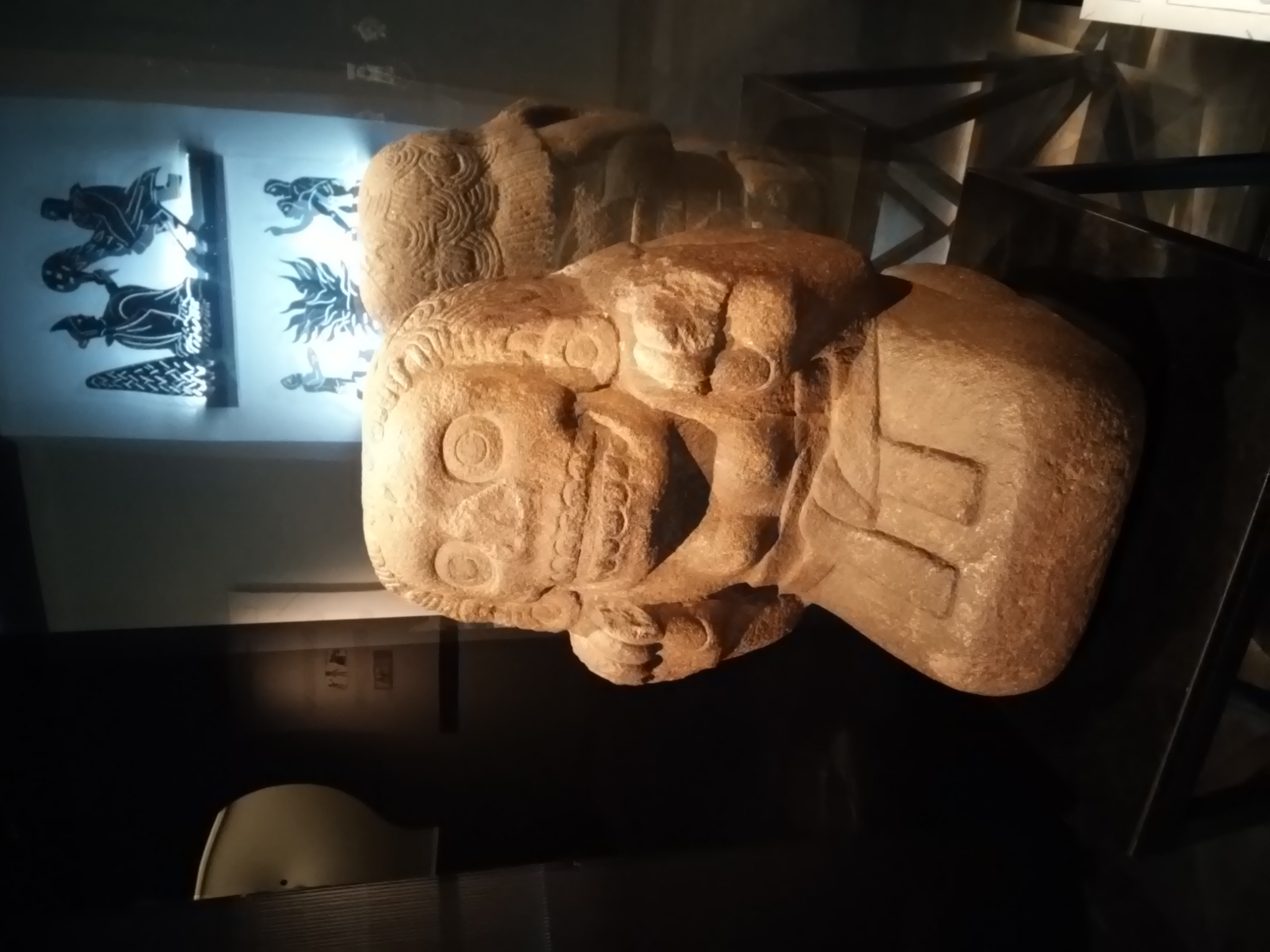
The Cihuateteo were spirits of women who died during childbirth. According to the Aztecs, these women were warriors (dying in childbirth was equivalent to dying in battle). Their spirits roamed crossroads, especially on the days Ce Mazatl, Ce Quiahuitl, Ce Ozomatli, Ce Calli, and Ce Cuauhtli.
Like the Tlahuelpuchis, the Cihuateteo attacked children, causing them illness and death. Aztec parents locked their children indoors on those days to protect them.
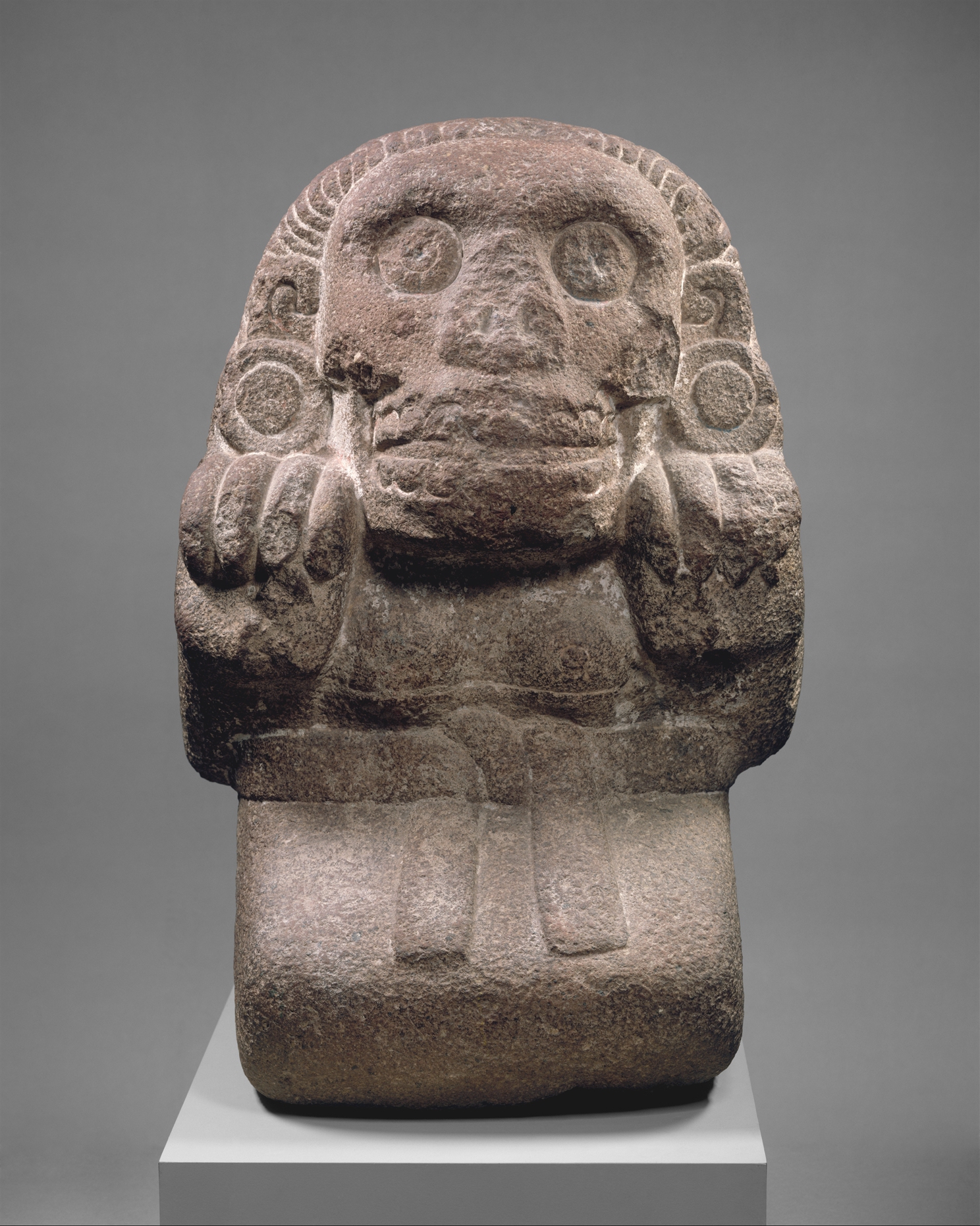
Source: Metropolitan Museum of Art — Wikimedia Commons (CC0, Public Domain)
The Tzitzimimeh
The Tzitzimimeh (singular: Tzitzimitl) were female stellar demons that descended from the sky during eclipses to devour humans. Depicted as skeletons with claws and serpent skirts, these entities share the Tlahuelpuchi's female, nocturnal, and predatory nature.
Science or superstition? The current debate
For skeptics, the Tlahuelpuchi legend has rational explanations:
- Sudden Infant Death Syndrome (SIDS): The primary medical explanation. Babies die without apparent cause during sleep, which historically was attributed to supernatural forces.
- Accidental suffocation: Co-sleeping practices in precarious conditions could cause suffocation, and post-mortem bruising was interpreted as "witch marks."
- Concealed infanticide: Some researchers suggest the legend may have served as a social mechanism to conceal infanticide in communities facing extreme poverty.
- Owl sightings: The "flying lights" could be barn owls (Tyto alba), whose silent flight and pale plumage can appear ghostly in the dark.
What to do if you believe you've seen a Tlahuelpuchi
If you ever find yourself in Tlaxcala or surrounding areas and experience something strange, here's what tradition recommends:
- Don't panic. Stay inside your home with doors and windows closed.
- Protect small children. Place metal objects (scissors, knives, coins) near their cribs.
- Turn on lights. The Tlahuelpuchi prefers total darkness.
- Don't chase her. According to tradition, pursuing a Tlahuelpuchi is extremely dangerous. If you discover her and fail to catch her, she will come for you.
- Don't point her out. If you suspect someone, don't announce it publicly. Tradition says the Tlahuelpuchi will take revenge on whoever reveals her identity.
Conclusion: a living legend
The Tlahuelpuchi is much more than a horror story. It is a window into the pre-Hispanic worldview, a reflection of the universal fears parents have for their children, and a fascinating example of how cultures create narratives to explain the unexplainable.
While in other parts of the world vampires are creatures of gothic castles and sharp fangs, in Mexico the vampire is your neighbor, your aunt, the woman who sells tortillas at the market — someone who is completely normal by day and at night transforms into a luminous turkey that flies over rooftops seeking innocent blood.
And the most disturbing part: in Tlaxcala, many still look up at the sky with suspicion when night falls.

Source: Unsplash (Free License)
Comments
Sign in to leave a comment
No comments yet. Be the first!